
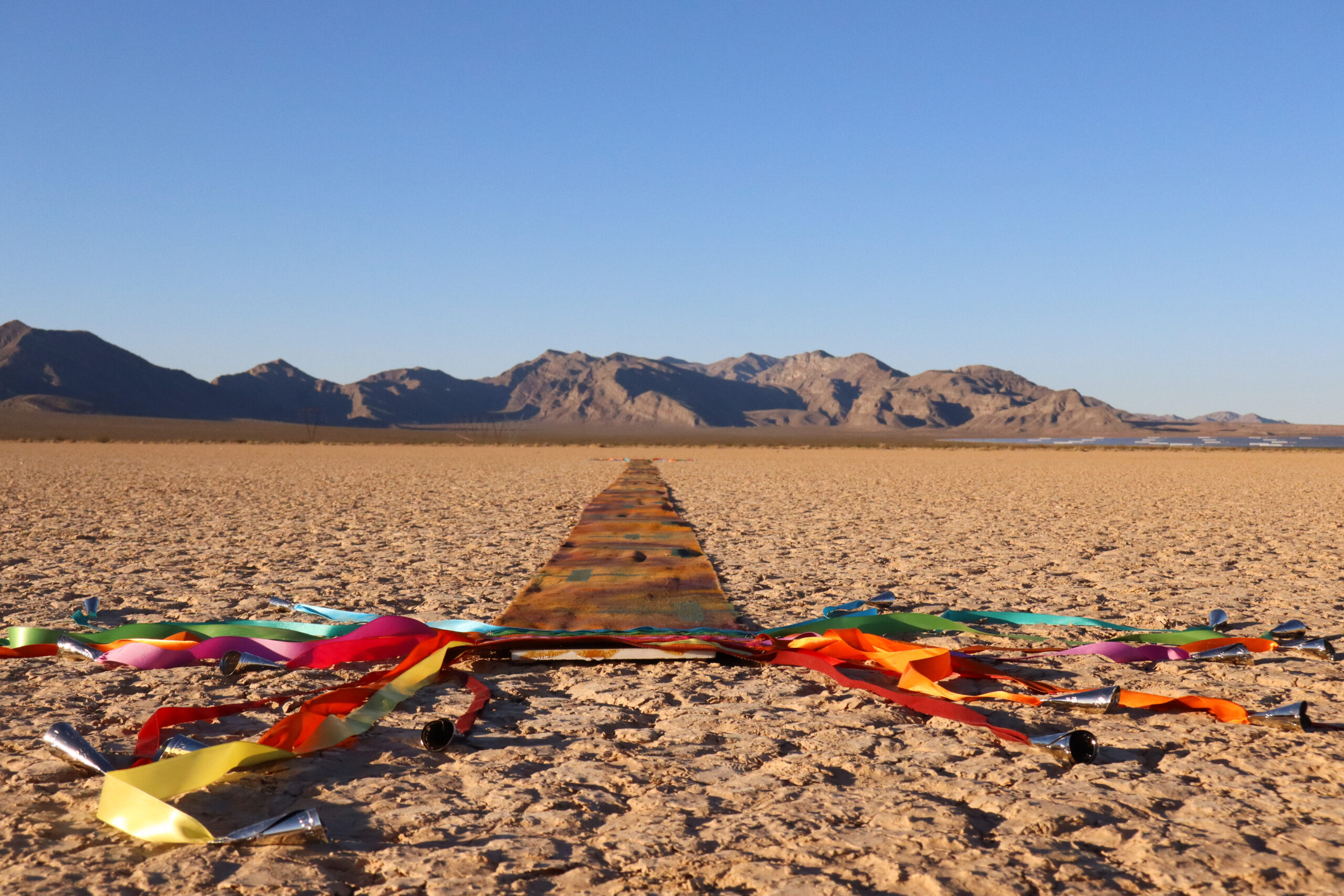
In the middle of the Nevada desert, where light travels for miles, Bailey Anderson is building something that was never supposed to be contained. An artist, curator, and co-founder of the Arts Community Coalition Nevada, Bailey helped birth the Desert Biennial Project, a sprawling, site-specific exhibition that has grown from 32 artists on a dry lakebed in 2023 to over 107 voices converging under the theme of Gravity in 2025. But what Bailey and her incredible team are really building goes beyond any single show. It’s infrastructure for the idea that art belongs to everyone, and that the work making people uncomfortable, the pieces collecting dust in studios because no gallery will touch them, deserve a stage as vast as the open sky.
Thanks for chatting with us, Bailey! Please introduce yourself to our readers.
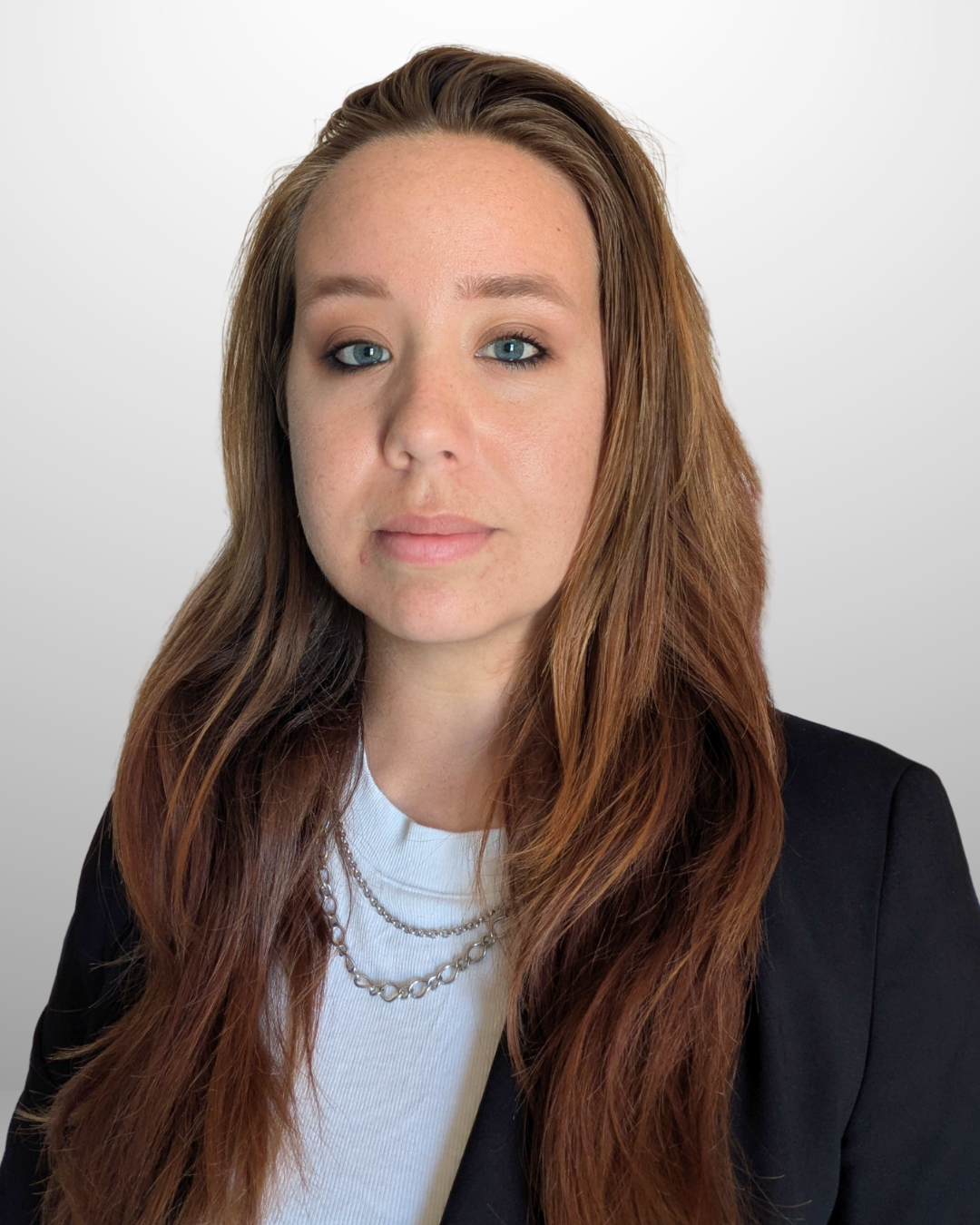
Hi Everyone! My name is Bailey, and I am an artist and curator based in Las Vegas, as well as cofounder of the Arts Community Coalition Nevada, 501(c)(3) for the longevity of art in Nevada. While that name is kind of a mouthful, you may recognize us by one of our main projects, the Desert Biennial Project.
The Desert Biennial Project has become a powerful platform for artists across Nevada. What originally inspired you and your partners, Laura Esbensen and Iulia Octavia, to launch this initiative, and how has your vision evolved since its inception?
Back in 2023, Iulia, Karla Lagunas, and I were all heartbroken at the closure of the well-loved Bullfrog Biennial. We all had this feeling of, well we can’t let this die, and decided to pick up where the other organizers left off. In 2023, we were at the Jean Roach Dry Lakebed, and celebrated the work of 32 artists at our first event, Stone Soup.
For 2025, Iulia and I were joined by Laura Esbensen, for Gravity. 107 artists came together to celebrate gravity in a physical context, as well as celebrate the ways that community leans in on itself for support. For Laura’s extension of the biennial (on top of helping bring this to life), was a satellite exhibition based on work for the DBP. DBP: FUSE included the work of multiple artists, which was on view at the Serva Pool Gallery at the Holland Project in Reno.
The Desert Biennial Project is a project. When Iulia and I sat down to build intentions around it, we imagined that this is a platform that should be sustainably built to change hands. Ideally, artists and curators come in, make it their own, and we can support them in doing so! We are beyond excited to announce that we have recently selected our curator for 2027. Emerging curator based in southern Nevada, Lydia Silic, is the mastermind behind DBP: FLUX, coming April 2027.

Last year’s theme, Gravity, invites artists to engage with the concept both physically and metaphorically. What drew you to this theme, and how do you see it resonating within the current social or environmental landscape?
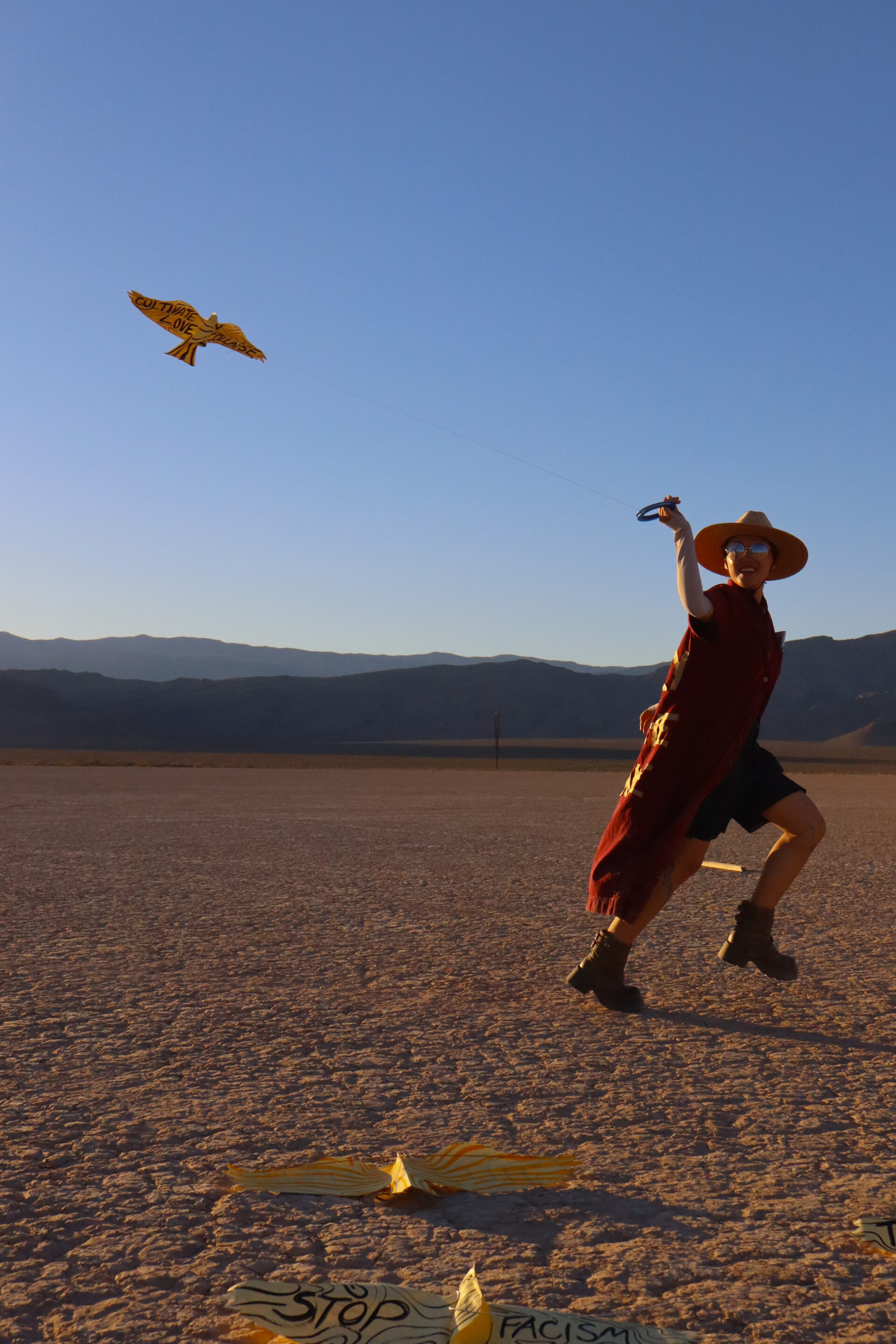
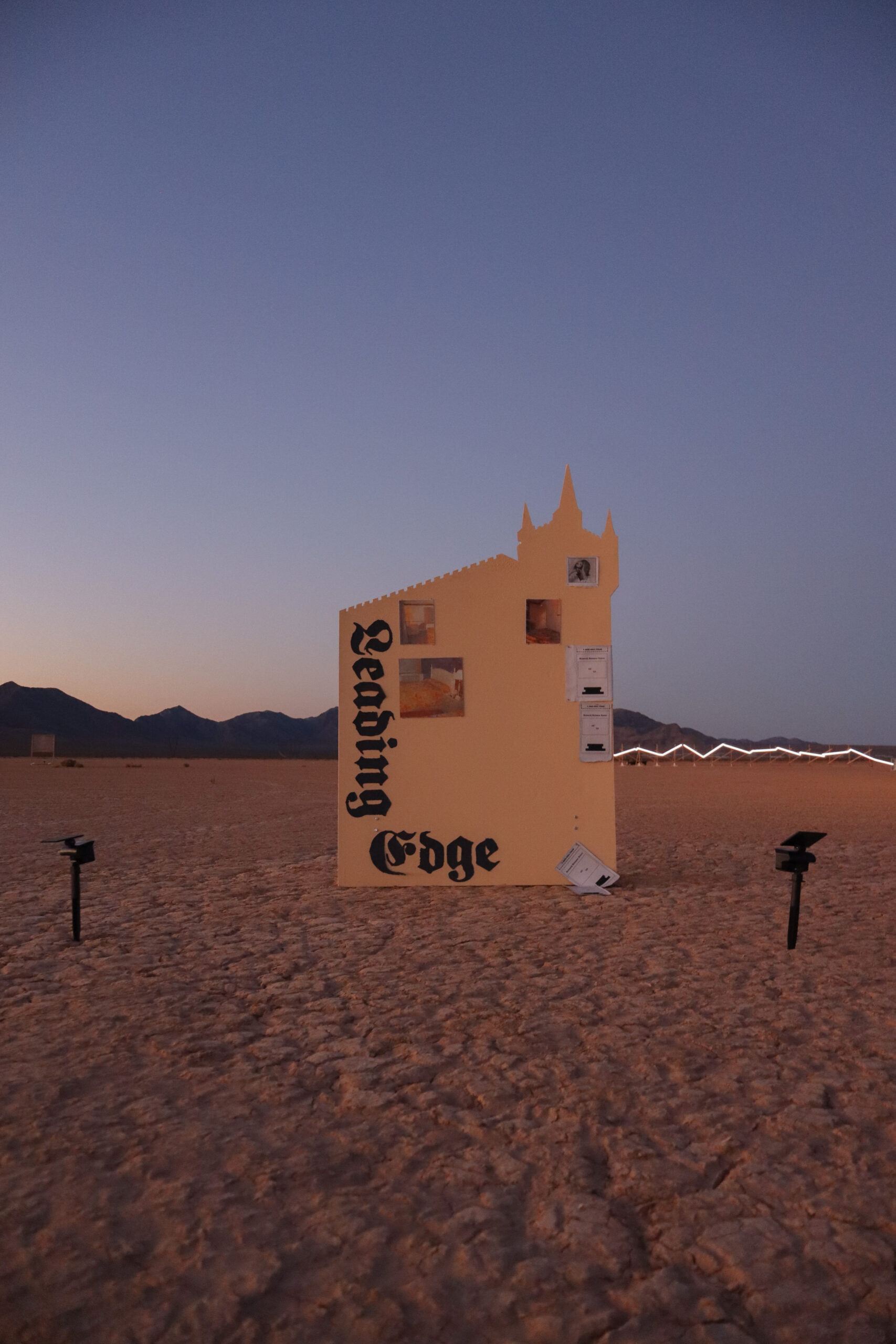
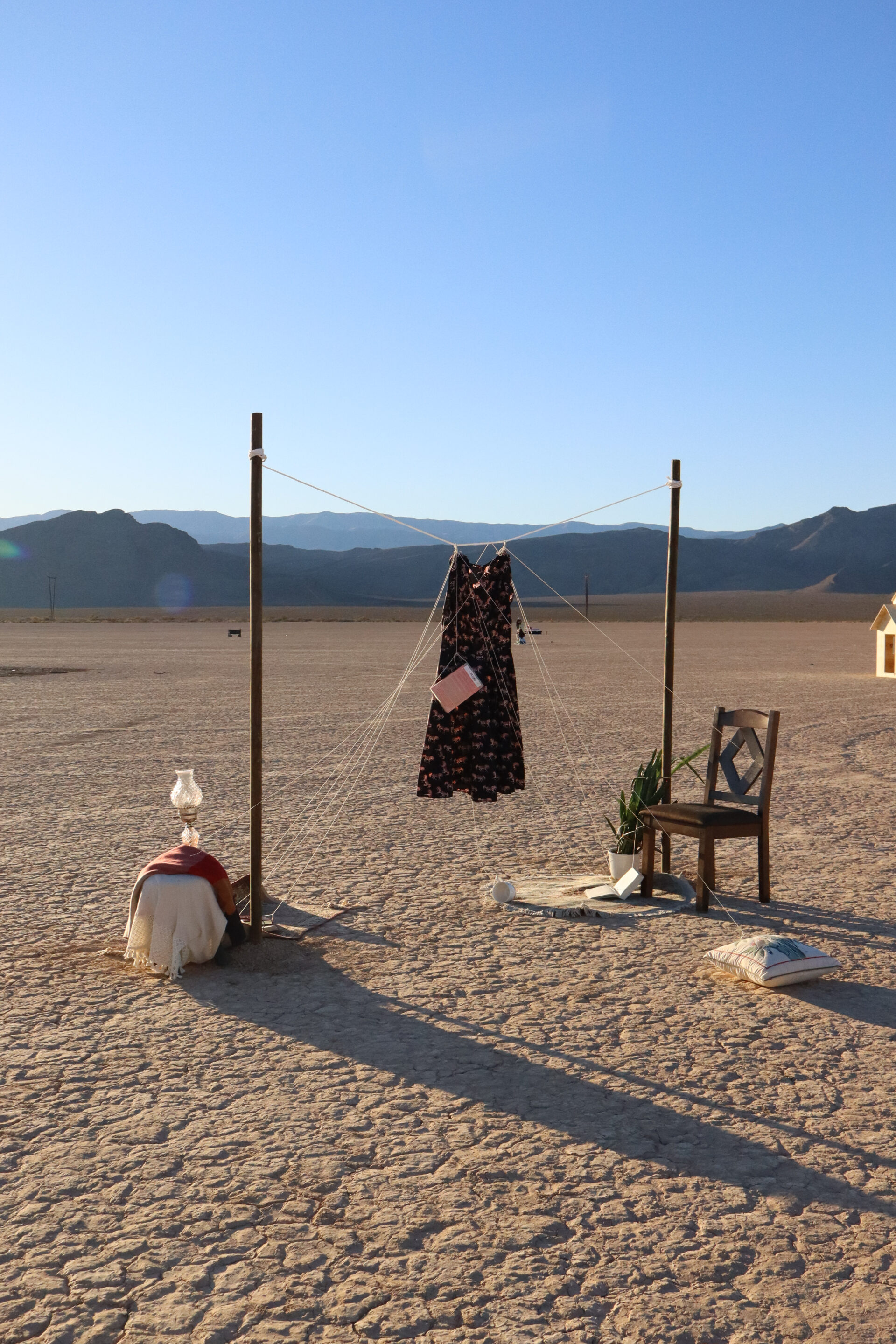
When we originally designed the theme, we wanted it to be an open invitation, hopefully antagonizing artists to find a way to use this loose construct as a way to support their independent practices. In the time between biennials, we have evidently lived in increasingly complicated times, and that can be corroborated by how the artists depicted weight, time, and space. Many of the artists created work that unpacked really divisive topics, including genocide, immigration, nuclear fallout, and more. What’s important to our mission at ACCNV, is that artists have access to outlets that they can share this work that demands change. Speaking freely on public land, without physical constraints, brings out the most ambitious parts of people. These artists are certainly no exception.
The Apex Dry Lakebed is a breathtaking setting for an art exhibition. How does the landscape itself shape the experience of both artists and visitors?
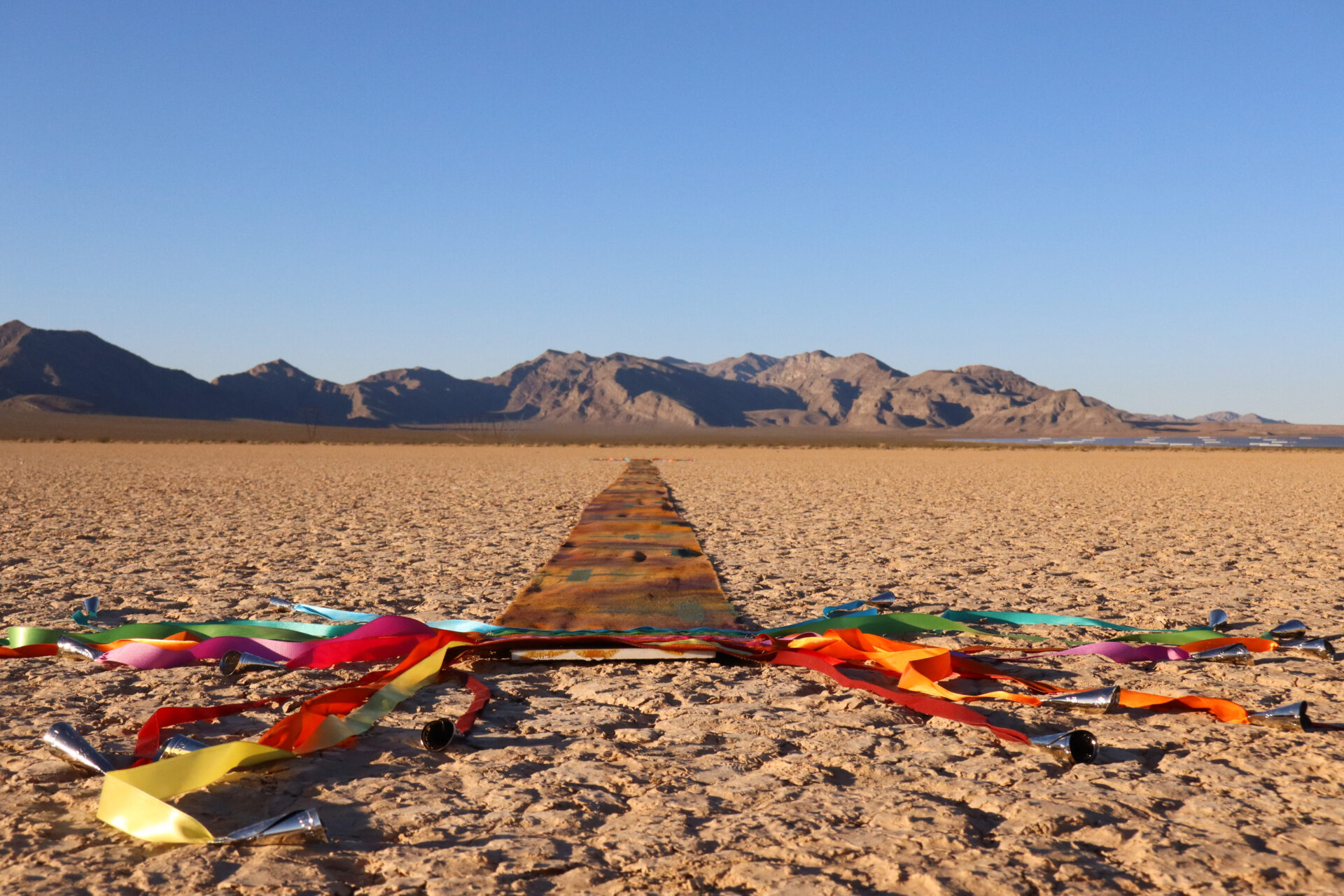
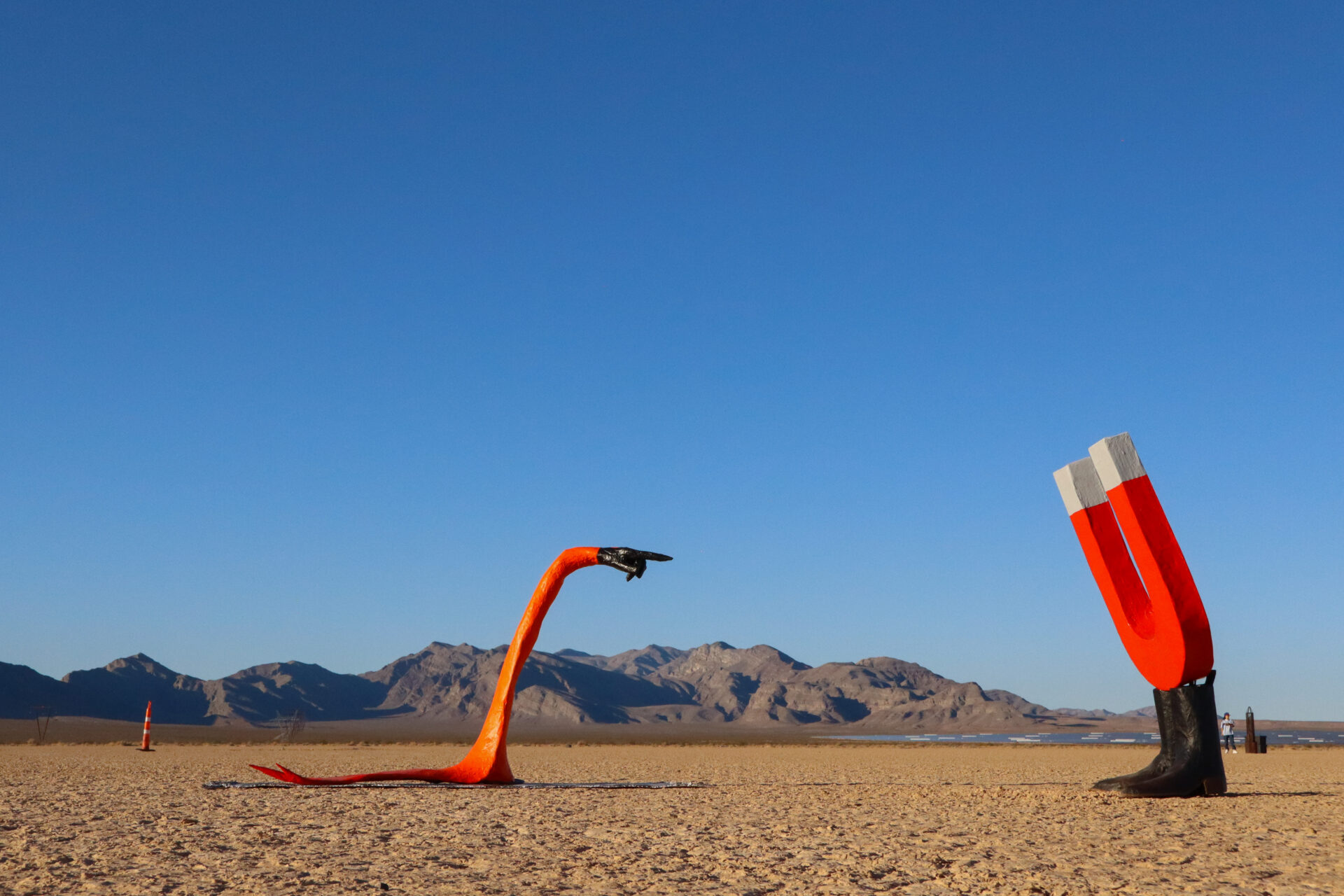
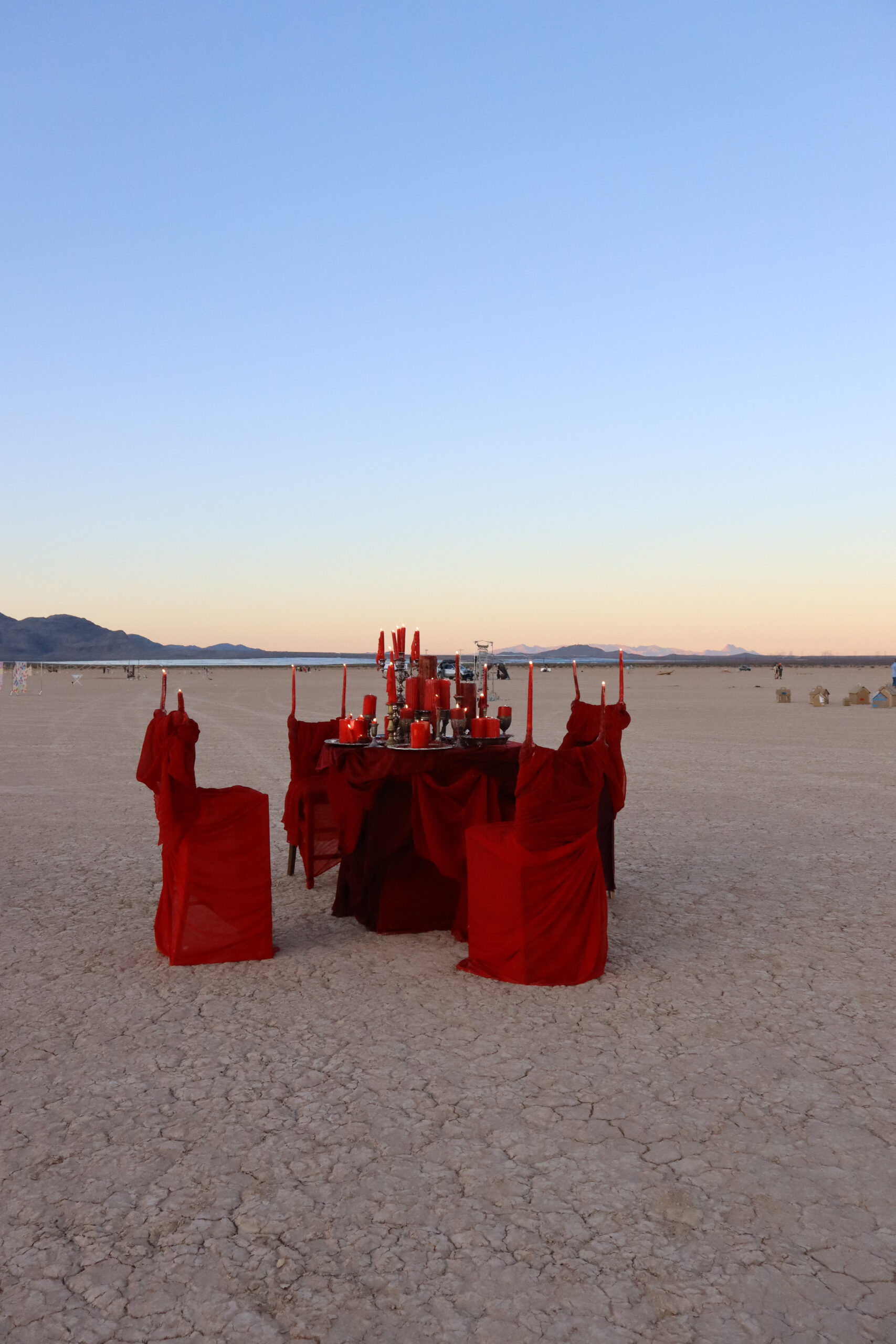
One of my favorite parts about the venue is the way that light and sound travel. It’s also magical when all of that falls away in the pitch black of night, becoming a void. We have a unique privilege of being in the West, seeing for miles in any direction builds a fascinating echochamber without walls. The way that pieces are placed next to each other pays extremely close attention to the way that the pieces will visually communicate. When building the map, I was extremely focused on details and semantics: materiality, context, and texture. These are all elevated in the raw landscape, functioning without a buffer like indoor lighting, white walls, or plush carpet.
Over 100 artists participated in DBP 2025! What was your curatorial approach in selecting and bringing together such a wide range of voices and practices?
When we first started our research, we cast a wide net to find artists who are committed to generating community, whether that’s through individual projects or regularly showing work. We then formed a committee to review selection proposals, which is made up of some of Vegas’ most invested curators and artist/advocates, as well as people that I deeply admire. One of the priorities for the exhibition was generating a well-rounded survey, something that wasn’t a priority in any other previous exhibitions in Nevada at this scale. With an exhibition of this size and caliber, it’s imperative that we see representation from artists across the state, not only in content, but career levels, perspectives, and material practices.
The diversity of voices in last year’s lineup is incredible! Raw Femme shares this vision of amplifying women and LGBTQIIA+ creatives. How does the Desert Biennial Project create space for underrepresented artists within Nevada’s evolving art landscape?
Space. The number one thing that we can provide for women, LGBTQIIA+, BIPOC artists is space. My background has taught me one thing, people love to over-describe. In textbooks, you’ll find compressed and misinterpreted artist intentions through intense curation-vision, because that is just unfortunately how translation works. Artists are brilliant, and rarely need curators to articulate what their work is about. It’s really important to let the work breathe. If curation is not an attempt to generate coincidence, it can often over-describe artist intention, exposing biases of curators, leading to erasure.
One of my favorite parts about the biennial is I never have to tell an artist ‘no’. If someone asks for 90 feet of space, the answer is yes. The ‘gallery’ is infinite in a way. Sometimes spaces have unique size challenges where an artist must neuter themselves. Or worse, a gallery tries to make an artist feel small, or tokenized.
If the biennial can do one thing, I hope that it shows artists that boundaries are fluid, and their perspectives belong in our community. Part of what makes Vegas and Nevada so special is our approach to community building. We don’t see divides between race and gender like there can be in other parts of the country. There is also a deeply impressive awareness for anti-colonial perspectives, as well as a huge breadth of creatives doing intense and meaningful work. We are by no means the only ones, and we know that its our responsibility to support each other as organizations and creatives to keep this cultural identity in motion.
Because the project is deeply rooted in community and collective identity, how do you balance your own curatorial perspective with the voices of the artists and the spirit of Nevada’s creative community?
I find that a really fantastic piece of art causes silence. Work that makes people lose their words. So much of life is reacting and replying. Silence isn’t a bad thing. It means a lot when no one has anything to say. It’s the difference between someone ending a sentence with a period or an exclamation mark. Silence makes people uncomfortable, and I think that is where the impact happens privately for a viewer.
Curation is a tool that is only effective if you let the work speak to each other. Great curating prioritizes that. I’d even argue that great curating isn’t supposed to be noticed at all, allowing the world to shine so brightly that no one even notices the other forces at play. Great curating turns individual pieces into a collective body, in order to do that, you have to listen. Placing pieces carefully together so they can cause a dialogue for a viewer is what makes a great show. I’m privileged enough to see so many great group shows and terrible group shows in my life. Not because the work is either good or bad, but because the curation is good or bad. I guess, it really just comes down to figuring out the best way to let the work shine, as well as giving it the circumstances to be properly informed.
As both an artist and curator, what has this year’s edition of the Desert Biennial taught you personally about your own creative practice or about gravity itself?
Someone talked about planting seeds that will create shade that you may never sit under. Vegas is also cyclical. I know that one day, me and my projects with others will be long gone, but the things that I say or do can have an impact – this is true for every single person.
Part of what inspires this project is the massive amount of rejection that I receive because of the content I want to make work about. Sure the cowboys and the spaghetti westerns are lots of fun, but that never caused me heartache. That never caused me guilt or dejection. The things that are currently hiding in my studio, or things that I made long ago that people walked out of crit over, those are things that never see the light of day. They have nowhere to go. If you see a piece at the biennial that makes your stomach churn, or sparks an awkward conversation, it’s there for a reason. Works like that can’t be shared in a municipal or commercial space.
I’ve learned a lot about pressure and integrity: our non-profit can’t apply for federal funding, and can’t receive any support from our local governments, due to the content of some pieces. The removal or censorship of one piece that may make us eligible for funding undermines our whole mission. With an event that costs roughly $10,000 to make happen, it can be intimidating knowing that you have to count on your neighbors and your friends. In the end, this is all we have anyways!
Doing what’s right is often also what’s hard. But as this project has developed, the community and local organizations have proven ten-fold that we are not alone at all.
As DBP continues to grow, how do you envision its evolution in the next few years? How can our community support this year’s event?
Again, the DBP is a project. It belongs to the community. We will provide the infrastructure, support, and knowledge, while guiding a small team to making the DBP their own. This project will shift and evolve over time. Ultimately, this is a site for curators to experiment and transform. They learn about donors, fundraising, and books, in hopes that they begin their own long term projects that nourish the state in ways that we are missing out on.
The best way you can support us is to show up. Be here to talk with the artists, share time with them, and be in community with each other at this unique site. As I’ve mentioned countless times, we can’t do this alone. Attend an opening, ask questions, and please come see what we’re about. There is so much beautiful art in this community and hiding in art studios, waiting to be shared with you!
This March, we are launching our first ‘Spring Series’: 12 exhibitions over 3 months, all weekend pop-ups. We are generously being hosted by el Mercado at the Boulevard Mall, in an experimental project space, ‘The Lab’. We hope that you’ll come by and see it!
And finally, a question we ask all of our interviewees—what is your interpretation of a Raw Femme?
A Raw Femme is a little rough around the edges. Those rough edges cause friction, and friction generates change. She doesn’t back down, she steps up when she is unsure of herself. In traditional spaces, femme is ill defined, and lacks truth. This reclamation of the word transforms the word, and generates a bold future where women and LGBTQIIA+ people make ‘it’ happen. A Raw Femme is unstoppable, built on spite and hope.